From Chatbots to Agent Clusters: AI Infrastructure Is the Next DevOps
Enterprises will deploy agent fleets, creating new challenges in governance and orchestration. Winners will build efficient, secure, scalable AI infrastructure.

Peter Steinberger’s recent revelation about his $1.3 million monthly OpenAI API bill has sent shockwaves through the AI community. But while many are fixating on the staggering cost, the real story is much more profound: we are witnessing the dawn of AI agent infrastructure.
The $1.3 Million AI Bill Is Not the Story. Agent Infrastructure Is.
603 billion tokens. 7.6 million requests. Around $1.3 million in OpenAI API spend in 30 days.
That headline is making rounds across the AI community after Peter Steinberger shared the operational cost of running around 100 Codex instances in the cloud. According to Peter, simply disabling “fast mode” could reduce costs by roughly 70%.
Most people looked at the number and thought:
“That’s insane.”
I looked at it and thought:
“This is what the future of software infrastructure looks like.”
Because the real story is not the bill.
The real story is this:
We are entering the era of AI agent infrastructure.
And most companies are still thinking about AI as if it were just a chatbot.
Enterprises Are Not Going to Run One Agent
For the last two years, most conversations around AI focused on:
- chat interfaces
- copilots
- prompt engineering
- model benchmarks
- LLM providers
But something bigger is quietly happening underneath.
Organizations are starting to move from:
- single AI assistants → toward
- fleets of specialized agents
That changes everything.
The moment you move from:
- “one assistant” to
- “hundreds of autonomous or semi-autonomous execution units”
...you suddenly inherit the same operational challenges we already experienced in:
- cloud computing
- Kubernetes
- microservices
- DevOps
- platform engineering
Except now:
- the workloads are probabilistic
- the execution paths are dynamic
- the context windows are expensive
- and every token has a cost
AI is no longer just a UX problem.
It is becoming an infrastructure discipline.
My Reality Check: Spending $20 Felt Expensive
Sometimes I look at my own side-project AI spending — around $20 Pro Plan plus APIs — and think:
“This is getting expensive.”
Then I see someone operating 100 coding agents consuming enterprise-scale token budgets and realize:
We are still early.
Very early.
The economics of AI agents will force companies to rethink:
- architecture
- governance
- orchestration
- observability
- execution efficiency
- runtime isolation
- and trust boundaries
Because the problem is not:
“Can AI work?”
The problem is:
“Can AI scale operationally and economically?”
That is a very different conversation.
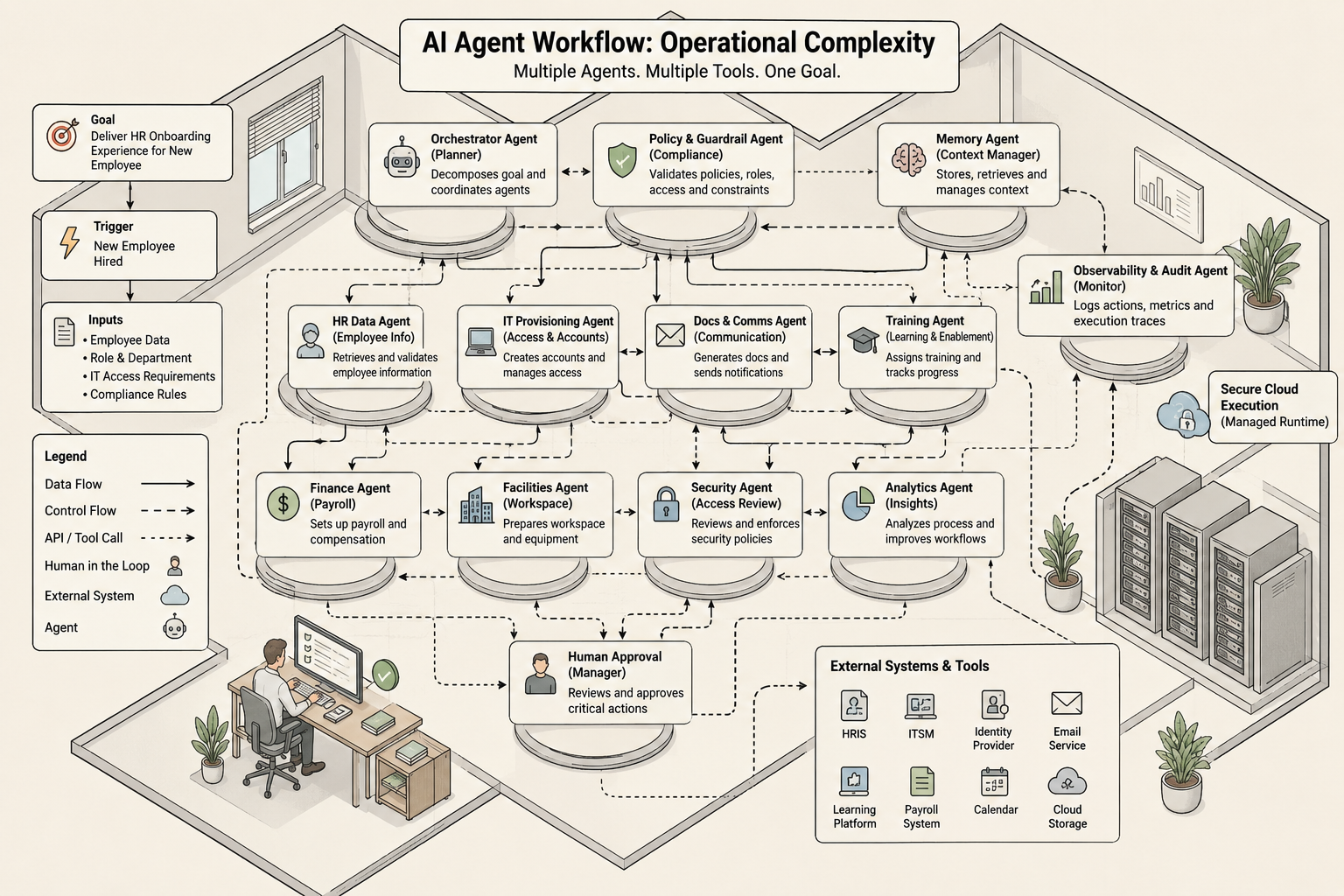
The Hidden Problem Nobody Talks About
Most AI demos today show:
- one prompt
- one agent
- one response
Reality will look more like this:
User Request
   ↓
Planner Agent
   ↓
Security Validation Agent
   ↓
API Discovery Agent
   ↓
Execution Agent
   ↓
Code Review Agent
   ↓
Compliance Agent
   ↓
Monitoring Agent
   ↓
Human Approval
Now multiply that by:
- departments
- regions
- customers
- workflows
- environments
- tenants
- business units
Suddenly:
- 10 agents becomes normal
- 100 agents becomes expected
- 1000+ agents becomes realistic
At that scale, enterprises will need answers for questions like:
Governance
Who approved this execution?
Traceability
Which agent triggered the API call?
Security
What permissions did the agent have?
Cost Visibility
Which workflow consumed the most tokens?
Context Efficiency
Why are we injecting 500 tools into every context window?
Runtime Isolation
Can this agent access production systems?
Compliance
Can we audit the entire execution chain?
These are not chatbot questions anymore.
These are infrastructure questions.
Kubernetes Solved Compute Orchestration. What Solves Agent Orchestration?
This is where I believe the industry is heading next.
Kubernetes helped us orchestrate:
- containers
- workloads
- networking
- policies
- scaling
But AI agents introduce an entirely new operational layer.
Agents need:
- identity
- memory boundaries
- execution policies
- tool governance
- workflow orchestration
- observability
- lifecycle management
- context optimization
- trust frameworks
In other words:
AI Agents need platform engineering.
And I believe this will become one of the biggest categories in enterprise infrastructure over the next few years.
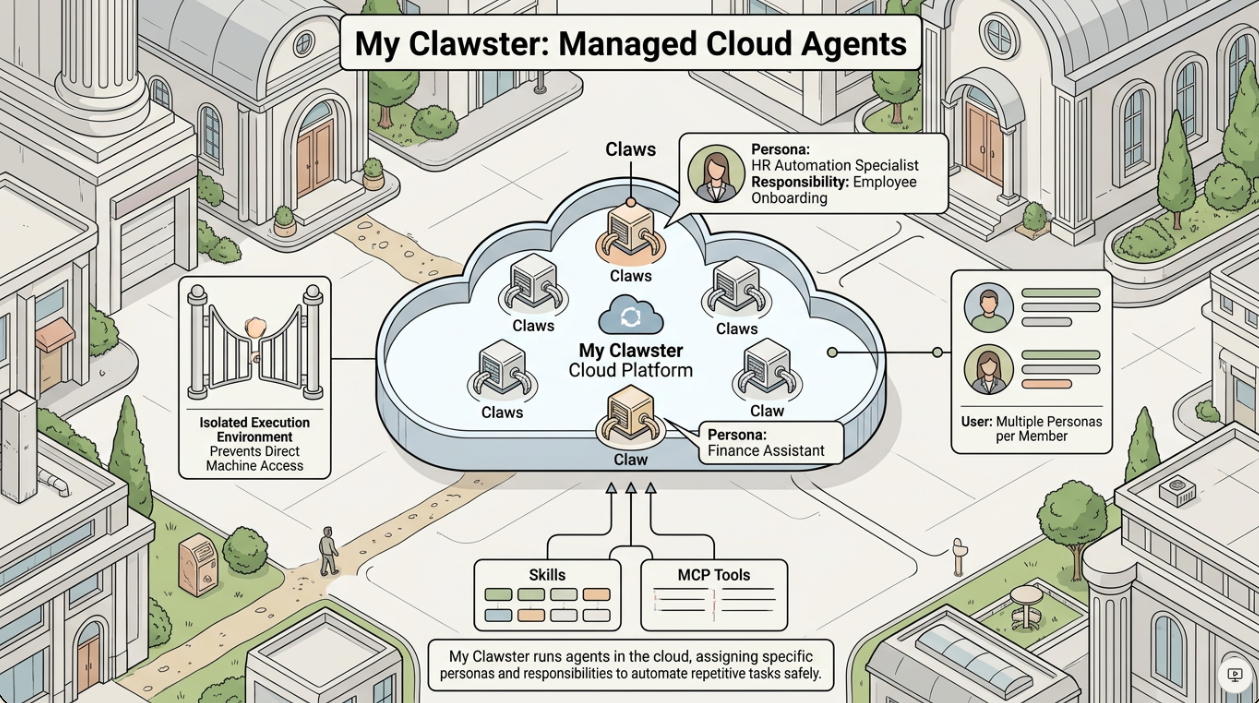
Why I Started Building “My Clawster”
This realization is exactly what pushed me to start building My Clawster.
At first, it was a simple idea:
“What if AI agents were treated more like governed infrastructure workloads?”
But the deeper I explored the problem, the more obvious it became: the industry needs more than “another chatbot UI.”
It needs:
- orchestration
- governance
- execution reliability
- agent lifecycle management
- policy enforcement
- runtime isolation
- observability
- discoverability
That’s where concepts like:
- clusters of agents
- managed execution
- governed APIs
- specialized personas
- isolated runtimes
- Skills
- MCP servers
- execution traces start becoming critical.
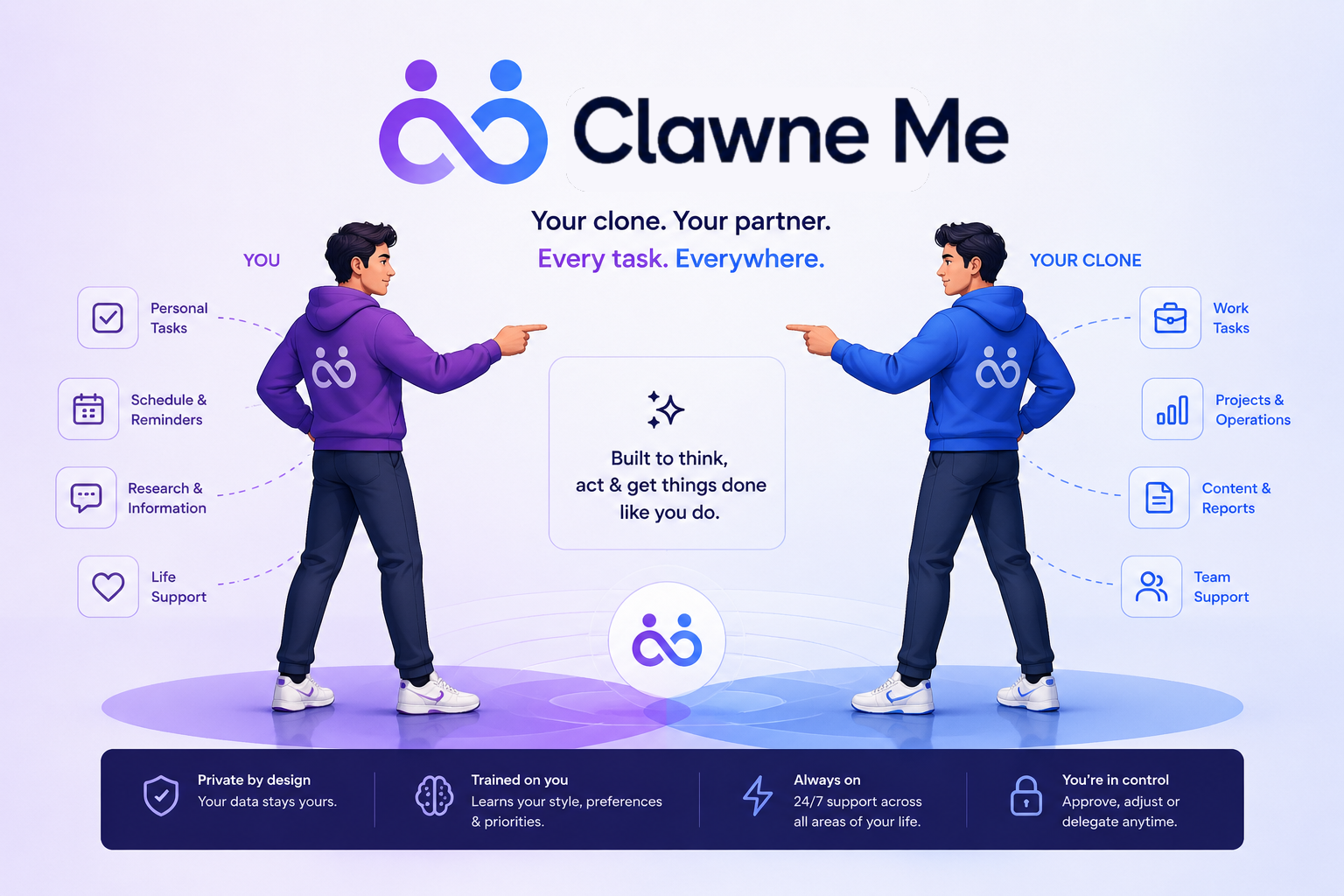
“Clawne Me”: Dogfooding the Future
One of the most interesting experiments I’ve been running internally is called Clawne Me.
The idea is simple:
Create specialized instances of yourself.
Not literally.
But operationally.
Different personas. Different contexts. Different responsibilities. Different execution boundaries.
For example:
- architecture persona
- DevOps persona
- product strategy persona
- research persona
- content persona
Each one optimized for:
- different tools
- different context windows
- different permissions
- different execution flows
This is where the conversation gets fascinating.
Because enterprises are not going to deploy:
“One AI employee.”
They will deploy:
“Entire organizations of specialized agents.”
And those organizations will require:
- governance
- structure
- security
- orchestration
- operational controls
Exactly like cloud-native systems did.
The Real Cost Problem Is Not Tokens
The industry keeps obsessing over:
- token pricing
- model costs
- inference economics
Those matter.
But they are not the biggest long-term problem.
The biggest problem is inefficient orchestration.
Examples:
- duplicated context
- oversized prompts
- unnecessary tool injection
- uncontrolled execution loops
- recursive workflows
- ungoverned retries
- context bloat
- poor agent routing
That is why:
- observability
- runtime governance
- Skills
- deterministic orchestration
- execution policies
- progressive tool disclosure
...will become foundational patterns.
The future winners will not necessarily be the companies with the smartest model.
They may be the companies with the most efficient AI infrastructure.
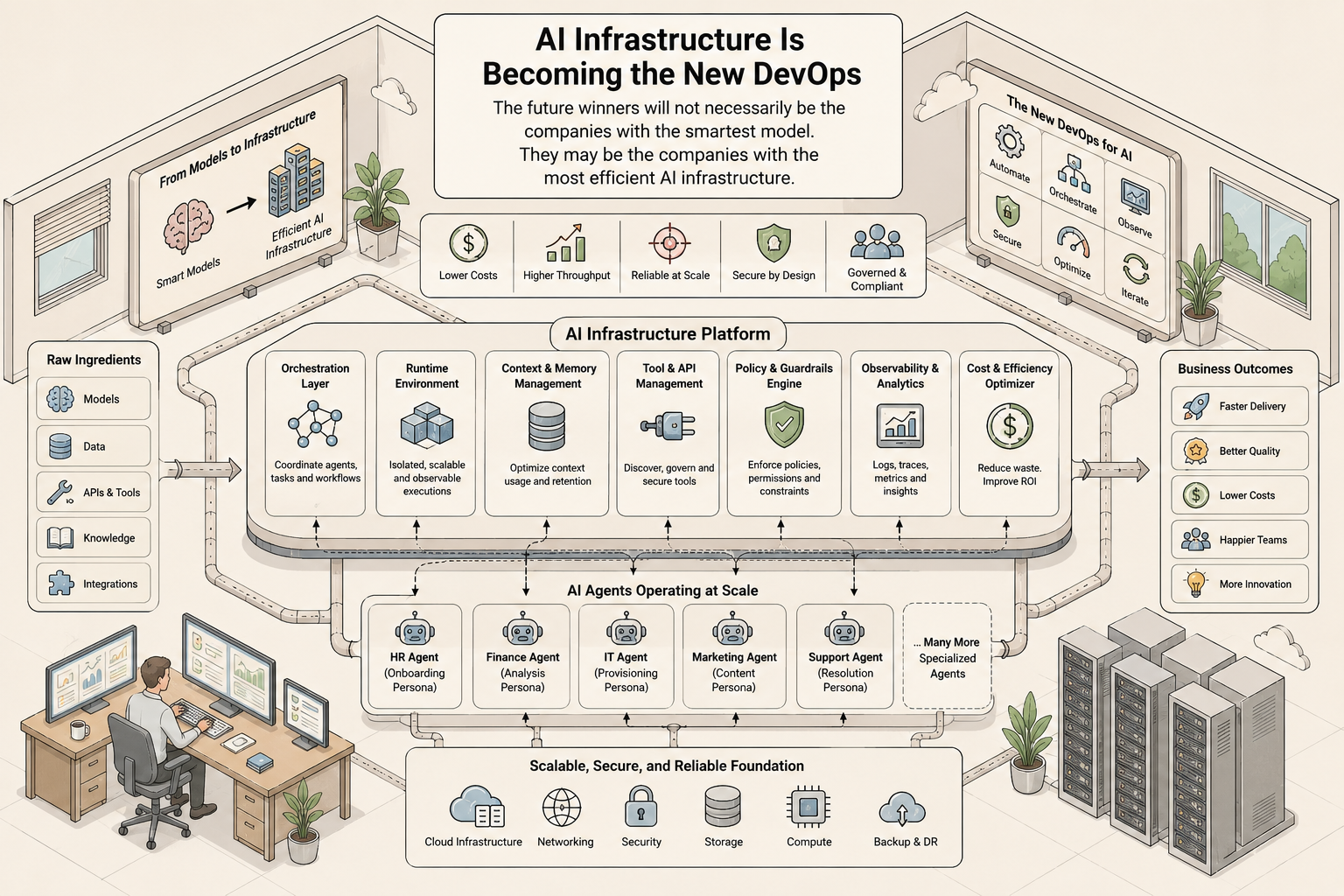
AI Infrastructure Is Becoming the New DevOps
A few years ago, companies realized:
- deploying servers manually does not scale
- unmanaged cloud infrastructure becomes chaos
- governance matters
- observability matters
- platform engineering matters
We are about to repeat the same cycle with AI agents.
Today:
- AI feels magical
- experimentation is easy
- everyone is building demos
Tomorrow:
- AI budgets will explode
- governance requirements will hit
- security teams will step in
- compliance teams will demand auditability
- platform teams will need orchestration layers
And that’s when the industry will realize:
AI Agents are infrastructure workloads.
Not just chat experiences.
Final Thoughts
The $1.3 million API bill is shocking.
But it is also a preview.
A preview of what happens when AI moves from:
- experimentation → to
- production infrastructure
The companies that win the next wave of AI will not only have:
- better prompts
- bigger models
- nicer UIs
They will have:
- governed execution
- scalable orchestration
- trusted runtimes
- efficient context management
- operational visibility
- secure agent ecosystems
That future is closer than most people think.
And honestly?
That’s exactly why I started building:
- My Clawster
- Clawne Me
- HAPI MCP
- Skills-driven orchestration
Because I believe the next evolution of AI is not:
“Talking to AI.”
It is:
“Operating AI systems at scale.”
References
Be HAPI and Go Rebels! ✊🏽