The Future of DevOps is Agentic AI
Imagine a world where deploying your microservices or managing complex DevOps workflows is as simple as working alongside an AI-powered assistant. Thanks to Anthropic's Model Conte
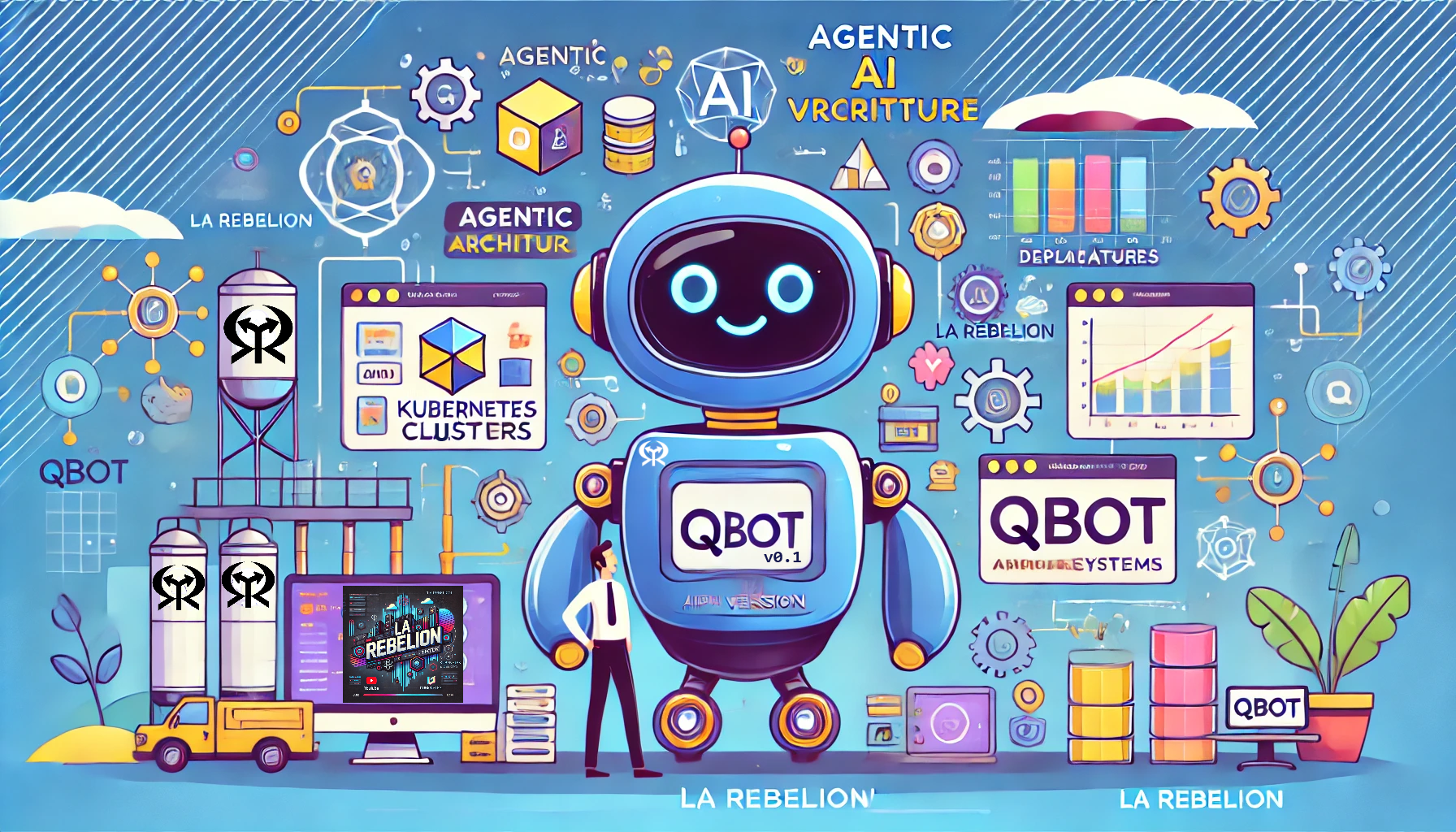
Imagine a world where deploying your microservices or managing complex DevOps workflows is as simple as working alongside an AI-powered assistant. Thanks to Anthropic's Model Context Protocol (MCP), this vision is becoming a reality. MCP simplifies the process of creating AI agents capable of handling complex tasks, enabling them to work together to solve problems, automate processes, and deliver results.
And here's the best part: MCP is not limited to a single language model like Claude. You can leverage any LLM (Large Language Model) to power your agents, providing unmatched flexibility for developers.
What Makes Agentic AI Different?
AI agents are evolving beyond simple chat interfaces. They can now reason through complex problems, plan and execute tasks, and collaborate with other agents. This "agentic" capability makes them more than assistants - they're powerful tools for augmenting human potential.
Core Components of AI Agents:
According to Armand Ruiz, VP of AI product at IBM, AI agents typically consist of four key components:
-
Agent Core: The brain of the agent, managing integrations and processes.
-
Memory Module: Keeps track of past interactions and data for better context and continuity.
-
Tools: APIs or other external systems that the agent can use to perform tasks.
-
Planning Module: Enables advanced problem-solving by analyzing and strategizing to achieve goals.

These features align closely with MCP's concepts in the core architecture, where Servers act as the agent core, Tools extend functionality, Resources provide context, and Prompts guide workflows.
MCP: The Backbone of Agentic AI
With MCP, developers can create agents equipped with powerful primitives:
-
Tools: Let agents execute actions, interact with external systems, and perform computations.
-
Resources: Provide structured data or content to enhance the agent's decision-making process.
-
Prompts: Create reusable templates to guide workflows, chain interactions, and surface user-friendly commands (e.g., slash commands in a UI).
This modular approach ensures that agents remain adaptable and powerful, capable of solving specific tasks or collaborating with other agents in a multi-agent framework.
With MCP Inspector, the developer experience is enhanced, allowing developers to easily debug and test their agents.

My Journey: Building an Agent to Deploy Microservices
I'm currently working on an AI agent designed to deploy microservices on Kubernetes. By leveraging MCP, I've created an agent capable of:
-
Using Tools to interact with Kubernetes APIs and manage deployments.
-
Accessing Resources to gather configuration files, cluster states, and deployment histories for better context.
-
Employing Prompts to streamline user interactions, enabling developers to input dynamic arguments or chain workflows effortlessly.
This agent, named QBot, is a DevOps "SME" (Subject Matter Expert) that assists users through deploying microservices, managing Kubernetes environments, and troubleshooting deployments. By combining the power of AI with the flexibility of MCP, QBot simplifies complex tasks and empowers developers to focus on innovation.
Why MCP and AI Agents Matter?
-
Simplifies DevOps: Newcomers can overcome the steep learning curve of Kubernetes with an agent guiding them through deployments.
-
Empowers Experts: Experienced engineers can focus on higher-value tasks by automating repetitive processes.
-
Scales Seamlessly: MCP allows for using multiple LLMs, meaning agents can adapt to different models or languages as needed.
-
Enhances Collaboration: Agents can work together, sharing resources and tools to tackle complex workflows that no single agent could handle alone.
-
Boosts Efficiency: By automating tasks, agents reduce human error and speed up processes, leading to faster deployments and more reliable systems.
The challenge is was to connect your data and APIs to LLMs, but with MCP, that problem is solved. You can have everything in your PC or AirGap environment and connect your data and APIs to LLMs.
Now, the developers can focus on building agents tailored to their needs, leveraging the power of AI to streamline operations and push boundaries.
How You Can Get Started
This is just the beginning of a journey to transform automation. By replicating my approach, you can adapt this methodology for other workflows, from testing pipelines to automating IT operations.

Want to build an agent tailored to your needs? Here's what to do:
-
Explore MCP: Familiarize yourself with its architecture and concepts here.
-
Identify Tasks: Start with a specific, repetitive task that could benefit from automation.
-
Design Your Agent: Use MCP's primitives to define your Tools, Resources, and Prompts.
-
Break down the task into smaller tasks that the agent can handle. These are your Tools.
-
Identify the data or context needed to complete these tasks. These are your Resources.
-
Create a workflow that guides users through the task. These are your Prompts.
-
-
Iterate and Scale: Test your agent, refine its capabilities, and expand it to handle more tasks.
I am going to guide you through this framework in future posts, sharing insights and tutorials to help you build your own AI agents.
The Road Ahead
The future of AI is agentic. As these technologies mature, we'll increasingly collaborate with AI agents to streamline operations and push boundaries. MCP provides the framework to start building these agents today, with the flexibility to use any LLM that suits your project.
I'm thrilled to share my journey and help you apply these concepts to your automation projects. Together, we'll explore how AI agents can revolutionize workflows.
Subscribe and follow "La Rebelion" for updates, tutorials, and insights as we navigate this exciting landscape. Let's enjoy the ride!
Take a look at our YouTube channel and subscribe to stay updated with our latest videos, I will be sharing more about AI agents, MCP, and how to build your own AI agents.
Let's simplify the complex, automate the mundane, and unlock the full potential of AI agents with MCP.
Go Rebels! ✊🏻
Update - Agentico
Agentico, where AI meets simplicity. I am working on this new amazing idea to solve some of the problems due to the proliferation of AI tools, and if you like me are asking:
-
What tools already exist?
-
Which tools fit my needs?
-
How do I find tools across diverse environments?
Identifying the right tools across multiple environments feels like finding a needle in a haystack. Agentico Tools discovery will help you tackle these problems.
Stay tuned!